It all started one cold winter day when I looked at two of my characters from my Urban Fantasy series, Evans Witches, and thought: hmm…they are quite notorious really. That that point I thought I would never write erotic fiction, but the idea kept coming up. So I…
Ordered research. A couple of emails with Alex from K-Lytics later, I knew that the genre I was going into was called Romantic Fantasy. And…there was a lot of Fae stories going on. As in A lot!
The first one I discovered was:
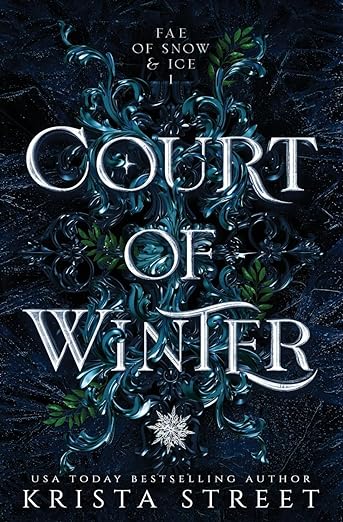
Absolutely incredible! I read it in one breath. And then, read it again. One of the things that I love the most about self published authors is the rawness of style. It’s like the books have a color to them, as if you can still feel the author there. It’s genuine. I absolutely fell in love with prince Norivun and the tension Krista creates between the characters.
I decided to take Court of Winter as my main inspiration for Fae of Skye’s first book: A Court of Fae. Although, unlike other fae stories, my Kalan and Freya come from two different kingdoms and have a history together (I wouldn’t want to give too many spoilers here…), there have the key elements shared in Fae stories: like the lethally strong combat-type man who is perceived as an enemy (Kalan and Freya come from rival kingdoms), the forced proximity: my Freya isn’t kidnapped, she makes a deal that serves both of them in order to cross a border but she has no control over how the journey goes, and…the guards, which brings me to:

Okay, I am a fan. I will probably read the entire Diskworld Book Series. As I write these words, I’m reading Going Postal for the second time. Equal Rites is the first book where we meet Granny Weatherwax. It’s laugh out loud funny and the story of the girl discovering her magic is amazing. 5 Stars (though I doubt I would ever give Terry Pratchett any less). The way the characters speak, the way he writes fight scenes there and the general style of humor and specific type of complexity in characters has inspired Bryce. Bryce is one of Kalan’s guards. He’s desperately been trying to learn the bagpipes and it’s not going well:
“Well, you know what they say: practice makes perfect,” I encouraged.
“Nah. Not after trying for two hundred and fifty years.”
I raised my eyebrows. “That long?”
He nodded. “Since king Luposidium the first, who hired me to write his poems which included full board and combat training too. But then, he ate a lunch after which he never rose. After that, I got a similar deal with Queen Kisadilia the fourth, who went to sleep on a mattress full of deadly spiders. Judicia the tenth, who had glass shards in her drink. Populous the seventh, who stepped on a poison needle. Olga the second, who got ran over by her own charial, twice. And Winnie the thirteenth who was strangled by Winnie the fourteenth. And then I moved from Glastonbury to Skye where rulers lasted centuries, and queen Isobel hired me as her poet, making me promise to never play or practice this, but when Kalan needed a new guard, he was more accepting of my music.”
Kalan and I both laughed the entire time.
If I had to name my chapters, I would call the fourth one Bryce.
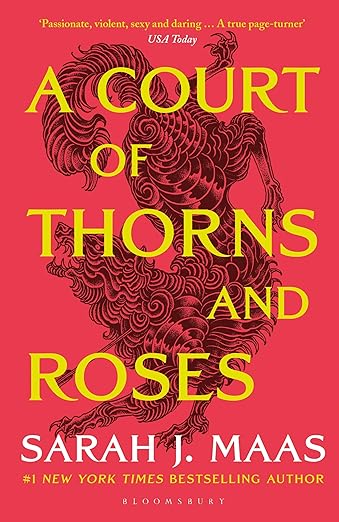
I often wonder where the fae theme in books caught on: Leigh Bardugo or Sarah J Maas. A Court of Thorns and Roses definitely has the main elements that Court of Winter above shares: lethal man fae, forced proximity and woman forced to join a journey to his place, rise of woman from non-magical to magical, and also from severe poverty to the extend of near-hunger to riches. My Freya was never poor, but she did have to work her way up on her own. Incidentally, “Freya” is not based on “Feyre”—I only discovered her after I chose the name—but on the goddess Freya (see Wicca below). Back to our two books: they both have a marketplace at the beginning.
I liked the marketplace. I really did. And I used it to build Freya’s cunning character when she negotiates for border information with Madame Kenina:
“I’m not certain I am the best…”
“I will find another traveler, then.” I reached out to grab the coin.
“Well…if you put it like that.” Her eyes narrowed as they met mine. She spoke in low tones. “There have been rumors around the towns of Pallas and Erving. Riots and raids. The people there say that our young Prince Barclay does not intend to follow in his late father’s footsteps. That the peaceful rule of the Seelie Court is over. They are afraid and are arming themselves.”
“This is public information,” my fingers closed on the coin. “There have been raids around the border. It’s not just rumors.”
She smiled. “Ah. But will they get worse tonight?” She locked gazes with me.
Yes, you can see Terry Pratchett inspiration there to: “Well…if you put it like that.”
So…Fae Courts:
The slow-burn chapters in A Court of Fire and Thorns, when Freya and Kalan rekindle their love is also inspired by the tension between Sarah J. Maas’s characters.
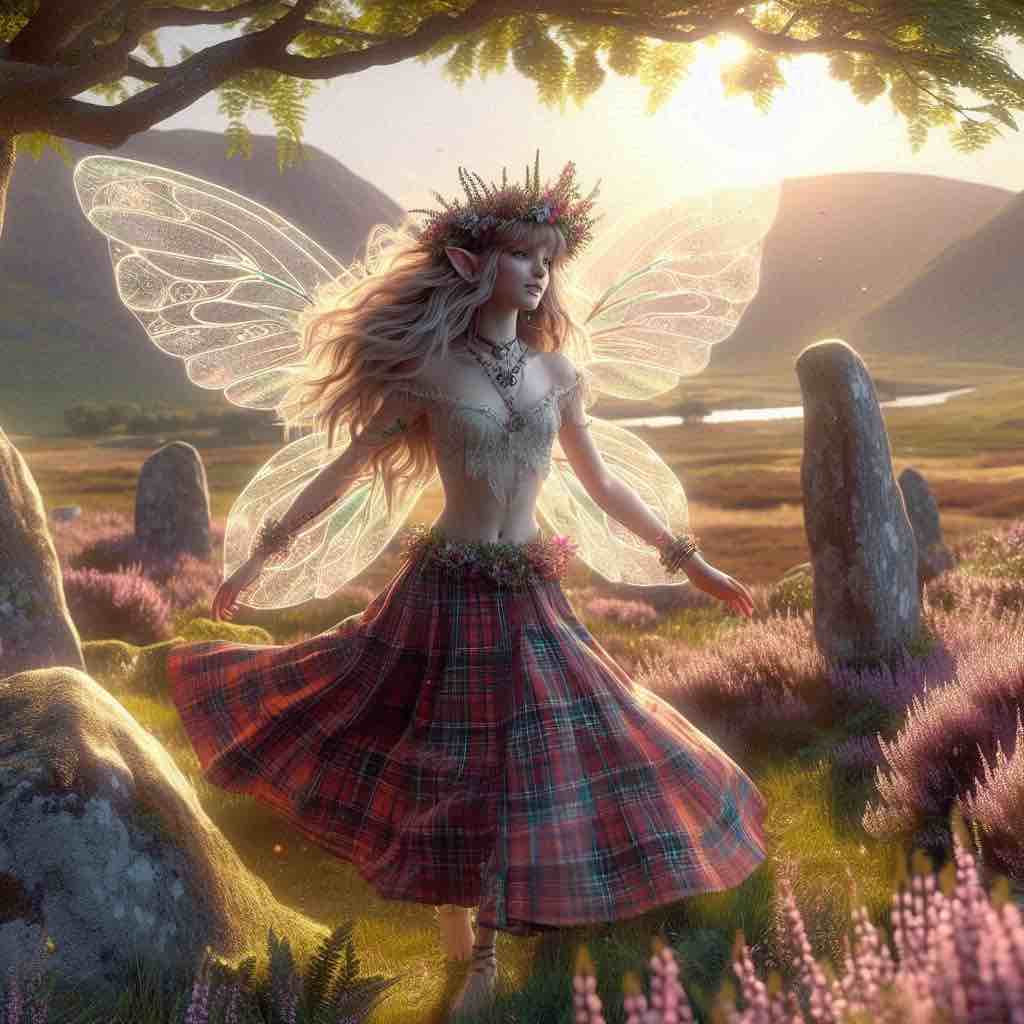
I decided that if I’m going to write a saucy erotic fae story, they have to be Scottish. A while back I visited the Fairy Glen in Isle of Skye – a place where everything looks as if it was shrunk. It’s beautiful. It was featured in movies. And so, I thought: hey, why not make my Fae fit the scene? I researched and found the UnSeelie and Seelie fae of Scotland. Two not-exactly-rival kingdoms, but very different in how they treat humans: some are mischievous, some are a bit more wicked. I left that bit out, but treated them as rival kingdoms, with conflict and tension between them, and a war almost about to explode, which leads me to:
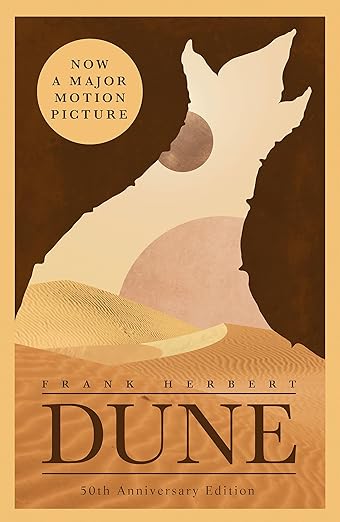
I was sitting one day in a one-man show called Dune the Musical I had read the book twice. At the time I was writing the first draft of Court of Fae and suddenly things clicked for me! This was the real basis I needed for the series as a whole. Court of Fae was the meet-cute, but the series needed depth and also when you write about two countries and conflict (a loaded topic in this world and in my personal life) you can’t make it all happy-happy. War is tragic and dark. And Dune captures that so deeply. So A Court by Birthright (book 2) is based on Dune, but the series already has the main elements from the start: The Paladan (like “Caladan”) are similar to the Fremen: a deprived yet brilliant people who are the hero’s accepting and nurturing refuge and source of personal growth. I also added the element of a hero’s ability to see beyond the present and into the secrets of the world around him.
I live in a Edinburgh, Scotland (see my author inspiration tour of the city here). It’s a city where we celebrate the holidays of ten religions, where due to different immigrations you can get Chinese food that is really Chinese and not westernised, Italian food that is really Italian, Lebanese that is really from Lebanon…you get my point and I added the link since I know them personally and I’m grateful for the cooking tips!
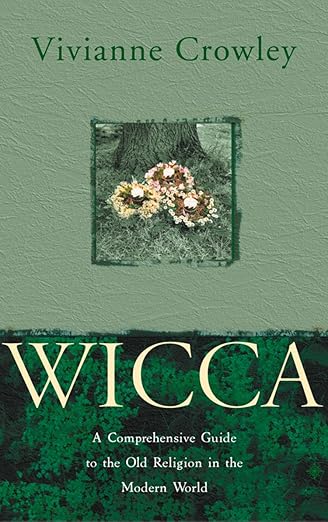
We also have pagans. The Celtic religions celebrate the seasons and changing sun during the wheel of the year (Pagan means country dweller). I’ve been to celebrations and social meetings. Wicca or other forms of Paganism are a polytheistic religion that worships both a God and a Goddess, and I have to say I have learned more from Vivian Crowley’s Wicca about being a woman than from any other religion I studied. They Triple Goddess ideal is already featured in Guinevere’s personal evolution in my Secrets of Camelot and here in Fae of Skye, the fae also worship both goddesses and gods. I also chose my character, Freya, based on the goddess Freya in the book and her legendary Brisingamen necklace.
The civil war that had split the land into the two kingdoms, is also inspired by the struggle of pagan people throughout history:
“Aye.” Bryce continued, “Religion causes the split: the worship of female and male gods and goddesses was the old way. Some suddenly wanted to worship one deity. Riots and disputes started and then, there was a war. Civil war. Lasted many years, it did. And ended in the split. Two kingdoms. Ironically, most of us are back to a polytheistic religion now.
I also added a strong organisation of wise women inspired by:
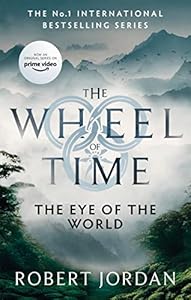
So… the Tower. The Aes Sedai. I loved it in this book series (Wheel of Time by Robert Jordan & Brandon Sanderson). Creating such a strong group of women leaders with power enough to reshape the world and also who also form a conflicted political organisation. My Matri live in the Tower, at the Seelie capital. They are teachers of magic, but also a political organization of women fae. Like the Aes Sedai, some are strong enough to hold back armies.
I hope you liked reading about the inspirations I have been influenced by in creating Fae of Skye series. I hope you enjoy my books and that you may have found a couple of other treasures to read on this page.
More Inspirations of the Series:
Paladan: (named after Caladan, from Dune): In book 2, A Court By Birthright, Freya and Kalan enter the Death Marshes, which are covered by perpetual magical mist. In them are the caves where the tribes of Paladan live – inspired by the Fremen in Dune.
Daikuyu: the main city in Paladan that we see in A Court by Birthright. The ancient tunnels, built to stop invaders, are inspired by Derinkuyu the ancient underground city in Nevşehir, Turkey.
We kept descending, deeper and deeper, through the maze of tunnels. The passage ways were sometimes very narrow; or at times, we’d have to hunch to pass. Some turns had stone doors that could shut and stop an invader, or slow it down. It was clear that all these mechanisms were intended to protect whoever lived here from outsiders. All along, the blue glow got stronger.
The houses and food of Daikuyu: since the name of the city came out Japanese, I decided to go with it. The house is inspired by the washitsu rooms with their clean empty spaces that convert into sleeping or dining areas. Along with tatami flooring and shoji paper windows. The food is inspired by sushi.
One room with an elevated wooden floor extended from the door all the way to the back. The ceiling was arched. Thin mats covered the space, and the entire far wall was covered, top to bottom, with windows that looked paper-made… Two fae quickly stepped in front of us as we entered. They took their shoes off, and slid part of the wall to reveal a closet behind it. They unrolled two mattresses and set them on the floor with pillows. Then, they exposed a spot under one of the mats, rearranged the wooden tiles and pulled out a table. Pillows were brought there to form comfortable seats. The rest of the rug-covered floor was left bare.
For the next hour, we roamed the town in search of Paladan’s traditional dishes, which turned out to be rice rolled in seaweed with various fillings, soup with seaweed, and vegetables fried in batter.
Kaymakuli, a similar city mentioned in book 3, A Court of Fire and Thorns, is based on Turkey’s Kaymakli
Brisingamen and its addictive magic: here my inspiration was the ring in Lord of the Rings though Brisingamen necklace is part of the pagan religion’s story of the goddess Freja
Orus: inspired by the ancient Egyptian sun got Horus.
Kardaukar: inspired by Dune‘s Sardaukar. Frank Herbert also used names similar to what inspired him (mainly history). For example: the fedaykin are inspired by the fedayeen during the Arab revolt against the Ottoman Empire 1916-1918 (the main inspiration for Paul Atreides is Laurence of Arabia)
Jukobytes – are based on the seventeenth century Jacobites’ rebellion with Bonnie Prince Charlie, and also on Ruhollah Khomeini and his revolution in Iran.
Cliffrad village and the Amsholian library are based on Radcliffe Camera in the Ashmolean library in Oxford. You can see a short video I took of it here.
And Nefratitit, the healer wife mentioned in that library, is based on the Egyptian queen, Nefertiti, which means “perfect.”